— I —
Library
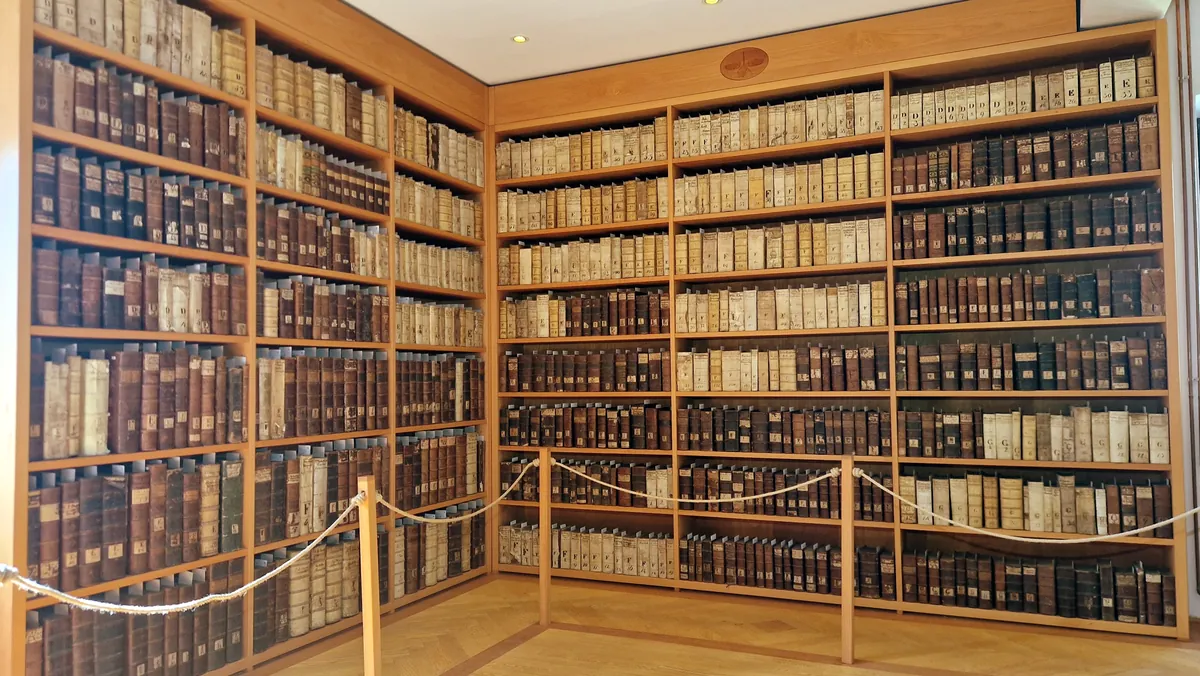
Five thousand volumes of historical holdings, twenty-one incunabula and shelves of leather-bound spines, lit only by daylight from a single window.
Škofja Loka · since 1706
The Capuchin Library, the Church of St. Anne and the monastery — three spaces that have breathed together since the early 18th century. Step into the silence of old books, unadorned altars and the story from which the Škofja Loka Passion Play was born.
Welcome
Since 1706, a Capuchin monastery has stood on the edge of Škofja Loka — a modest white complex that holds some of the most precious manuscripts and printed books in Slovenia.
The tour leads you through the Church of St. Anne, with its altar of the dying saint and three chapels, on through the exhibition rooms devoted to the Capuchin order and the origins of the Škofja Loka Passion Play, and finally into the library, where 21 incunabula, Dalmatin’s Bible, Valvasor and five thousand other early printed works rest on the shelves.
All in roughly forty minutes — long enough for the place to settle into you, and long enough to make you want to come back.
Three spaces
Each space has its own character and rhythm. Together they form a single image of Capuchin life — prayer, learning and humility.
Five thousand volumes of historical holdings, twenty-one incunabula and shelves of leather-bound spines, lit only by daylight from a single window.
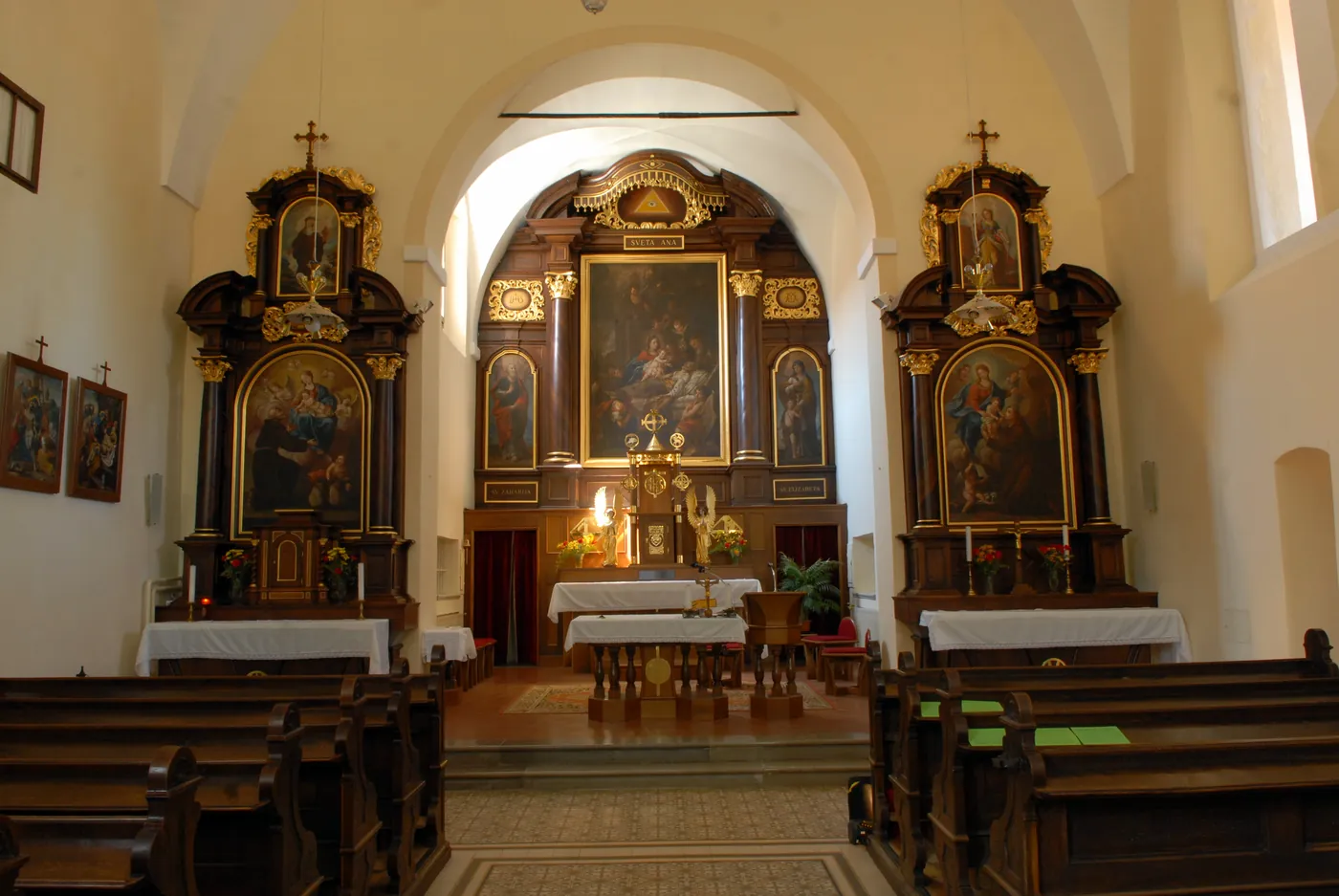
A single-nave church consecrated in 1713. The main altar shows the dying St. Anne with Mary, Jesus, Joseph and Joachim — a depiction without parallel in Slovenia.
The cloister, an atrium with a sundial from 1709, and the annex of exhibition rooms telling the story of the order, the Passion Play and Father Romuald.
On the library
The monastery has had a library from its very beginnings. It grew significantly in 1786, when the books of the recently dissolved Capuchin monastery in Kranj were added. Today it holds about 5,000 volumes of historical holdings with the status of a cultural monument and 21 incunabula; the oldest dates from 1473.
Among its most precious printings are Dalmatin’s Bible (1584), Megiser’s quadrilingual dictionary (1592), Valvasor’s Glory of the Duchy of Carniola (1689) and the Sacred Manual of Janez Svetokriški.
“Many of the books are bound in leather, others in parchment with Latin manuscripts — among them even a few in Glagolitic.”
On the Church of St. Anne
The Church of St. Anne is a typical example of Capuchin building: a simple single-nave space with two chapels, a monastic choir behind the main altar and an atrium with a cloister in front. Everything must remain within the bounds of simplicity; the altars are wooden, made from materials that were close at hand.
After the latest restoration (1996–1998) the altars are once again in their original natural oak and walnut with gilded capitals. In the Marian chapel you will see a copy of the famous Cranach Mary, Help of Christians, whom the people of Škofja Loka chose as patroness of their town in 1750.
On the monastery and the Passion Play
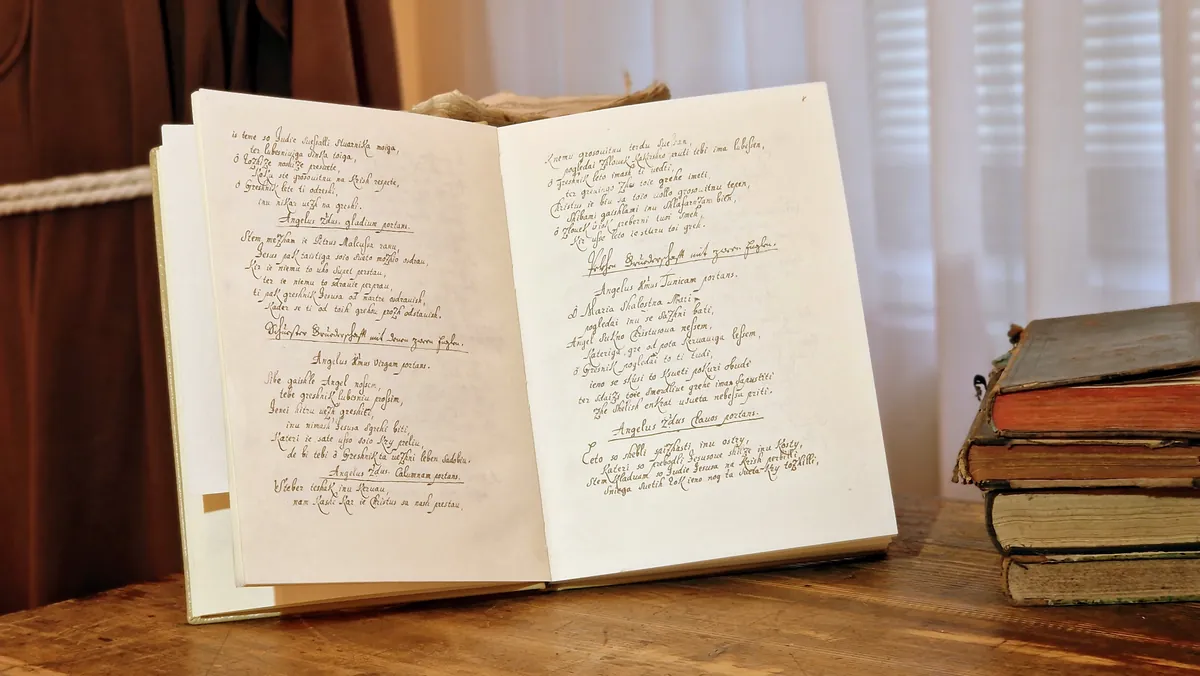
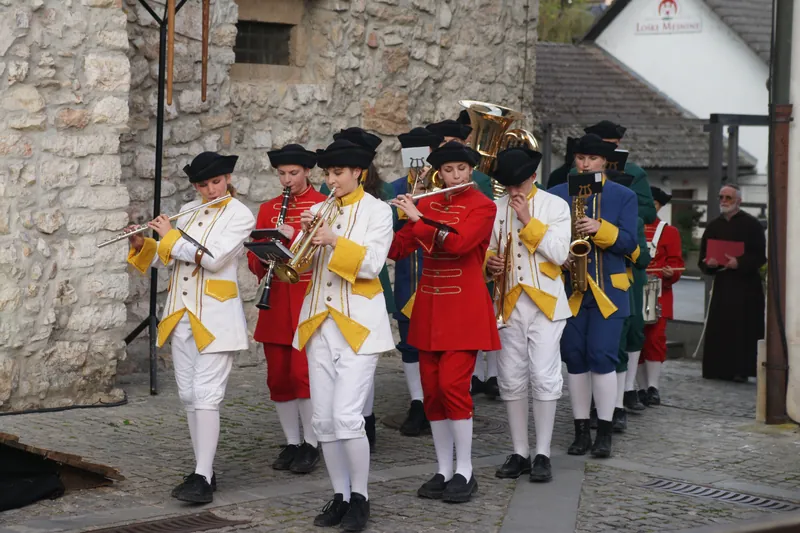
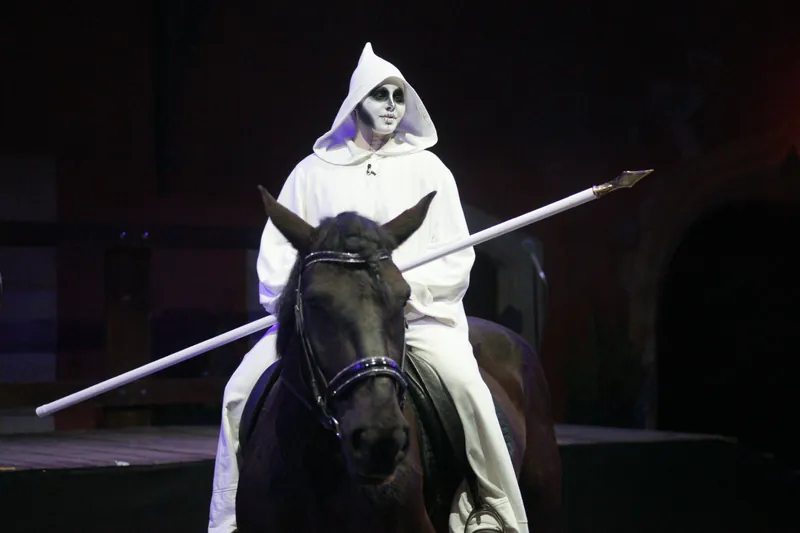
From the devotion of the Loka Capuchins and the Confraternity of the Most Holy Sacrament was born the celebrated Good Friday Passion procession. Its text was written in 1721 by the Capuchin Father Romuald Marušič — today the oldest surviving dramatic text in the Slovene language.
The original manuscript of the Passion is a precious treasure of the monastic archive and the foundation of the modern Škofja Loka Passion Play, inscribed on the UNESCO list of intangible cultural heritage. In the exhibition rooms you can see it together with the reliefs by Vinko Mohorčič and a documentary film.
Modern performances
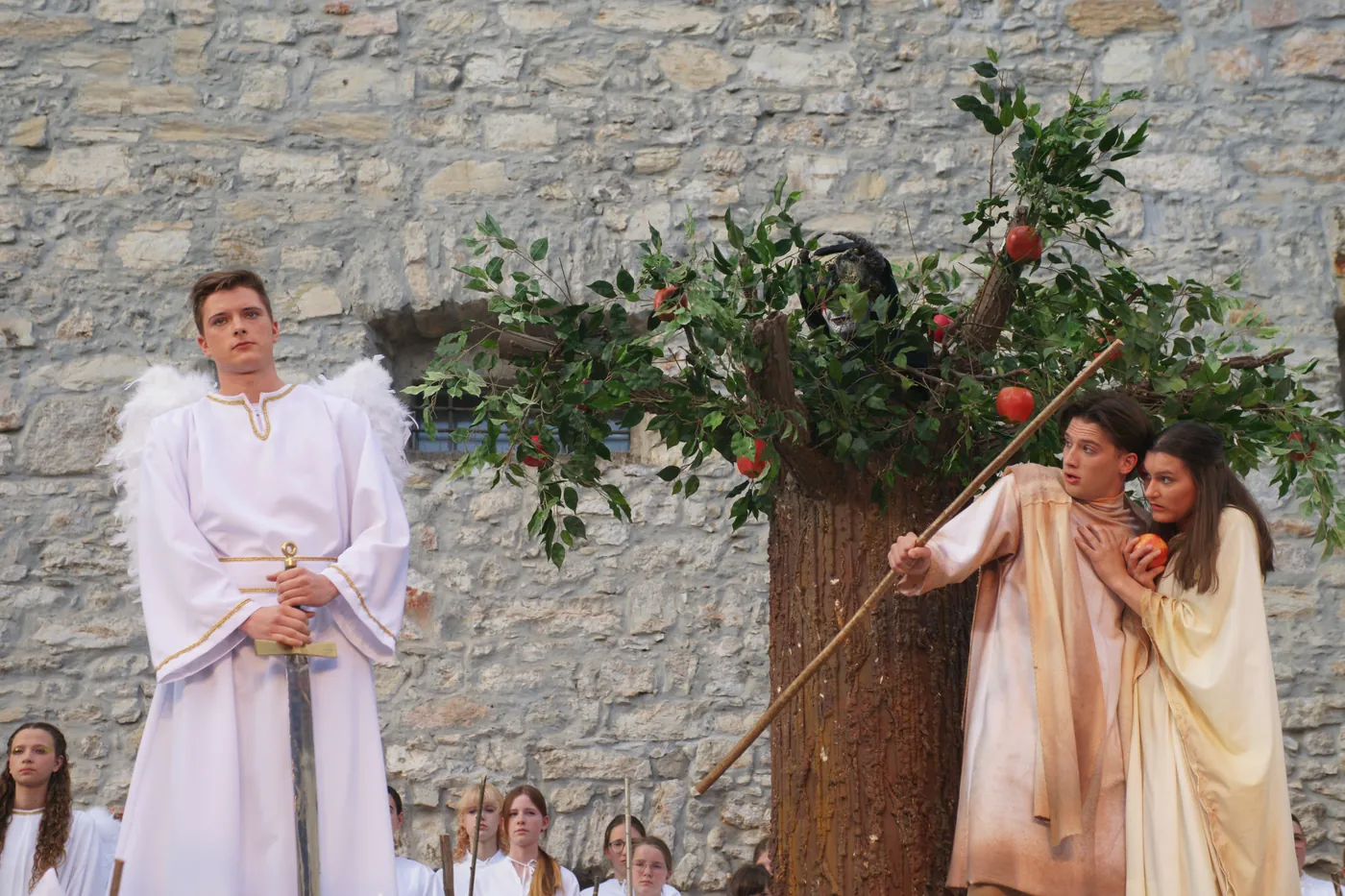
The modern Škofja Loka Passion Play was revived in 1999, with subsequent productions in 2000, 2009, 2015 and 2026. The 2026 production was the first to take place as part of the UNESCO Intangible Cultural Heritage list, on which the play has been inscribed since 2016.
Nearly 1,000 actors and more than 1,300 volunteers took part in the 2026 production. A circular procession through the old town led past four venues where 20 scenes were performed. The performances ran from 21 March to 12 April, directed by Marcelo Brula.
The next performance will take place in 2032 — productions now follow a six-year cycle.
Do not miss
For conservation reasons the most precious originals are kept in protected storage. During the tour we show facsimiles of Dalmatin’s Bible and the Škofja Loka Passion Play manuscript; the historical collection from after 1500 can be seen in the original.
1584
The first complete translation of Holy Scripture into Slovene, printed in Wittenberg.
before 1500
The oldest from 1473 — books from the first decades of European printing.
1721
By Father Romuald Marušič — the oldest surviving drama in Slovene.
1786
Five thousand leather-bound books — a cultural monument of the highest category.
Tour route
The route leads from the church across the cloister and atrium into the library, ending in the exhibition rooms devoted to the Škofja Loka Passion Play and the Capuchin order.
The tour begins in front of the Church of St. Anne.
⌁ About 40 minutes in total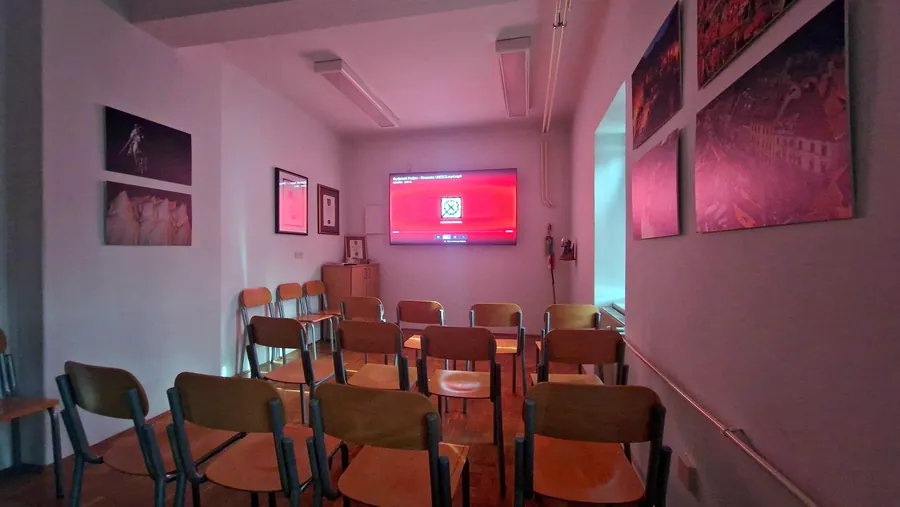
In the video room you can watch a short introductory film about the Škofja Loka Passion Play — best seen at the start of your visit to the exhibition rooms.
Practical
We recommend arranging your visit in advance.
For larger parties we recommend splitting into two groups.
Admission
Kapucinski trg 1
4220 Škofja Loka
Parking
Municipal car park,
Kapucinski trg 3
↗ View on map
Frequently asked
Book a visit
You can book online via our form, or by phone or email — we look forward to welcoming you.